The Future of Space Exploration: Innovations Reshaping Our Cosmic Destiny
Space exploration has always been a beacon of human curiosity and ambition. From the first satellite launches to the current advancements in space technology, humanity has continually pushed the boundaries of what is possible. Today, we stand on the brink of a new era in space exploration, driven by groundbreaking innovations that are transforming how we interact with our universe. These developments not only promise to expand our scientific understanding but also have the potential to revolutionize life on Earth.
1. Advanced Earth Observation Systems
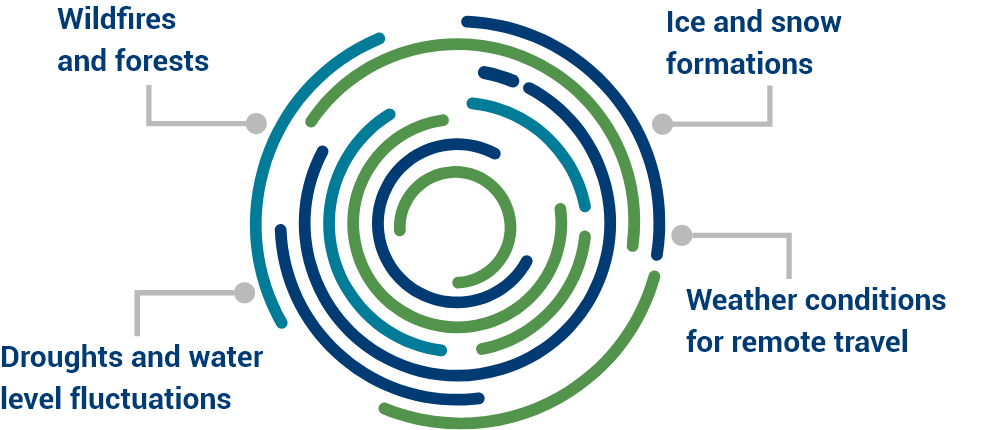
Modern Earth Observation (EO) systems have become an essential tool for monitoring our planet. With over 50% of climate data now coming from satellites, these systems offer unprecedented insights into environmental changes. The latest EO technologies combine hundreds of spectral bands with high-resolution imaging, allowing scientists to detect even the smallest changes in our environment.
These systems are complemented by machine learning algorithms that analyze data in real-time, enabling immediate responses to events such as pipeline leaks or crop diseases. For instance, the Japan Aerospace Exploration Agency (JAXA) has been at the forefront of this research, accumulating 15 years of carbon dioxide data through their GOSAT program. This data is crucial for understanding and mitigating climate change.
2. The BioSuit: Next-Generation Space Mobility
The MIT Media Lab's BioSuit represents a significant leap forward in space mobility. Unlike traditional bulky spacesuits, the BioSuit uses mechanical counterpressure, employing elastic materials to maintain pressure against the astronaut's body. This design reduces mass by approximately 60% while providing greater mobility.
The suit's modular construction allows for rapid repairs, and advanced biosensors continuously monitor vital signs. As we prepare for missions to Mars, the BioSuit could be the difference between survival and thriving in the harsh Martian environment.
3. Space-Based Solar Power (SBSP)
Imagine having a miniature sun in orbit, beaming clean energy anywhere on Earth 24/7. That’s the vision behind Space-Based Solar Power (SBSP). JAXA's SBSP prototypes aim to use massive solar arrays spanning several kilometers, achieving conversion efficiencies exceeding 45%. These arrays transmit power via microwave beams to receiving stations on Earth.
Caltech's Space Solar Power Project has demonstrated successful wireless power transmission in space, bringing us closer to a future where unlimited clean energy can be harnessed from space. With China, Europe, and the UK also investing in similar projects, the dream of SBSP may soon become a reality.
4. Advanced Satellite Mega-Constellations
The next generation of satellite networks, developed by companies like SpaceX, Amazon, and Eutelsat, utilizes inter-satellite laser links capable of transmitting data at rates exceeding 100 gigabits per second. These networks incorporate quantum encryption and automated collision avoidance systems, ensuring secure and reliable communication.
As launch costs decrease, it becomes more feasible to deploy thousands of satellites, creating mega-constellation networks that will provide global internet coverage. These systems also feature on-orbit servicing capabilities, allowing for hardware and software updates without requiring satellite replacement.
5. Space-Based Manufacturing
Space-based manufacturing is unlocking new possibilities for production processes that are impossible to replicate on Earth. The International Space Station (ISS) is currently producing ZBLAN optical fibers with signal loss 100 times lower than traditional silica fibers. Pharmaceutical companies are utilizing microgravity crystallization to develop more effective treatments for diseases like Alzheimer's and various cancers.
Future space factories will feature autonomous robotic systems, advanced 3D printing facilities, and biological manufacturing capabilities that may one day print human organs. As Dr. Dava Newman noted, "Now we get opportunities and within months we can design and develop... and launch it within a year."
6. Active Debris Removal Systems
With over 35,000 tracked pieces of debris threatening satellites and missions, active debris removal systems are becoming increasingly important. These systems combine robotic capture arms, electromagnetic tethers, and drag sail systems to de-orbit multiple pieces of debris simultaneously.
They are equipped with ion propulsion for precise maneuvering and laser-ranging systems for accurate debris tracking. These technologies could potentially remove up to 5-10 large debris objects per year per vehicle, ensuring the safety of orbital assets.
7. Lunar and Martian Habitat Systems
Next-generation planetary habitats are pushing the boundaries of what's possible. ICON's Project Olympus is developing autonomous 3D printing systems that use local regolith to construct radiation-shielded structures. These habitats incorporate advanced life support systems that recycle up to 98% of water and oxygen, while utilizing bioregenerative systems for waste processing and food production.
Habitats feature self-healing materials and smart radiation shielding that adapts its properties based on solar activity. Initial lunar habitats are expected to be operational by the early 2030s, with Mars habitats following in the 2040s.
8. Health Monitoring and Biomedical Research
Current operations aboard the ISS conduct approximately 250 science missions during each six-month crew rotation, with a significant portion dedicated to biomedical research. JAXA's protein crystal growth experiments in microgravity produce exceptionally well-formed crystals that enable better analysis of protein structures, accelerating drug design processes.
These advances are vital for long-duration missions, with Newman emphasizing the importance of understanding "the spectrum of gravity" from microgravity to Earth-normal and beyond for human health. While this research continues in Earth orbit, it will also be conducted in future Lunar habitats.
9. Next-Generation Space Propulsion
Breakthrough developments in magnetoplasmadynamic (MPD) thrusters offer the potential for both high thrust and high efficiency. New variable-specific impulse systems allow for optimized performance across different mission phases. Nuclear thermal propulsion systems under development by NASA and DARPA promise to reduce Mars transit times by 40% compared to chemical rockets.
Advanced ion propulsion systems, utilizing new propellants and higher-power solar arrays, are achieving thrust levels previously thought impossible for electric propulsion. These advancements are critical for expanding commercial opportunities in higher orbits.
10. Asteroid Resource Utilization
Modern asteroid mining concepts go far beyond simple precious metal collection. New technologies enable processing of raw materials directly in space, with autonomous refineries capable of producing fuel, construction materials, and even complex manufactured goods.
Advanced prospecting systems combine multiple sensing technologies to precisely characterize asteroid composition and structure. Decreasing launch costs are making such ambitious projects increasingly feasible. The technology could potentially access resources valued at trillions of dollars while providing critical materials for in-space manufacturing and propellant production.
11. Orbital Servicing Infrastructure
The emerging field of in-orbit servicing is evolving from simple life extension missions to comprehensive maintenance and upgrade capabilities. Modern servicing vehicles combine sophisticated robotics with AI-driven autonomy, capable of performing complex repairs and modifications in orbit.
These services are supported by advanced diagnostic systems that can predict potential failures before they occur. As highlighted at the Annual Meeting, this technology could extend satellite operational lifetimes by decades while enabling regular upgrades to maintain technological relevance.
12. Artificial Gravity Generation
Research in artificial gravity systems extends beyond simple rotation-based approaches. New designs incorporate variable gravity zones that can be adjusted for different physiological requirements. Advanced magnetic systems show promise for localized gravity control.
Understanding "the spectrum of gravity" from microgravity to Earth-normal is crucial for future space exploration. Research is exploring the use of selective artificial gravity exposure combined with advanced biotechnology to maintain human health during long-duration spaceflight.
The Future Outlook
The space sector is experiencing unprecedented democratization and commercialization. As Newman observed, "SpaceX is not so special anymore. Low Earth orbit... it's just available to everyone." However, challenges remain, particularly in areas like defense and sustainability. Kubilius emphasized the growing importance of "defense for space" against various threats, while industry leaders stress the need for international cooperation in addressing challenges like climate monitoring and space debris.
Perhaps most excitingly, as Kubilius playfully suggested, by century's end, people might choose between "100km to the nearest beach or 100km up to space... for the weekend." A by-product of a quick trip to space could be the "overview effect," whereby travelers coming back from space gain a new perspective and understanding of the fragility of our planet.
Many of these developments in space applications are already delivering now on Earth, playing a crucial role in our day-to-day activities. While we may not be building the Starship Enterprise just yet, the technologies emerging today are laying the groundwork for humanity's cosmic future.


Comments
Post a Comment