The Future of Customer Service: How AI is Transforming the Industry
In today’s fast-paced business environment, customer service has evolved from a reactive function to a proactive, data-driven strategy. As customer expectations continue to rise, businesses are turning to artificial intelligence (AI) to meet these demands efficiently and effectively. From handling routine inquiries to providing personalized support, AI is reshaping how companies interact with their customers. This article explores the role of AI in modern customer service, its benefits, challenges, and how businesses can leverage it to stay competitive.
Understanding AI's Role in Modern Customer Service
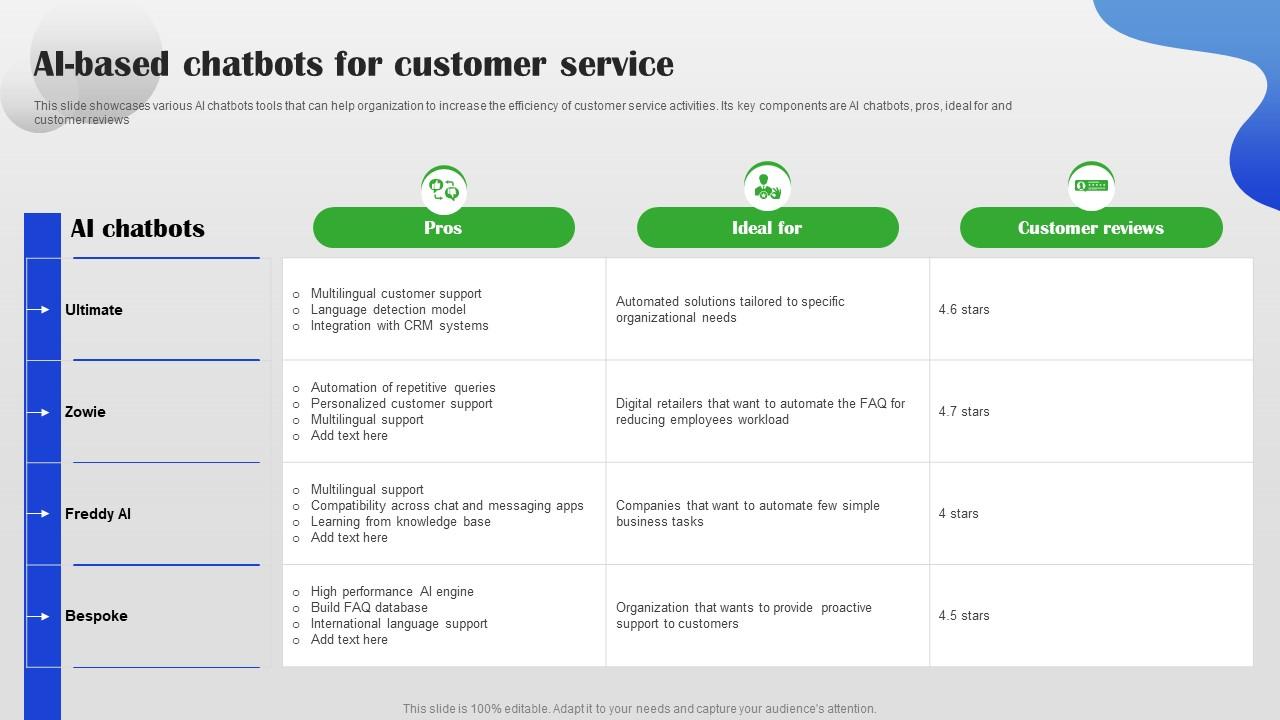
Artificial intelligence is no longer just a buzzword—it’s a game-changer in customer service. Businesses are leveraging AI to transform contact centers from reactive support hubs into proactive, predictive engines that enhance customer experiences and streamline operations. With AI, companies don’t just respond to customer needs—they anticipate them.
Examples of AI in customer service show AI shifting support from reacting after a problem to spotting it early. It listens to customer conversations in real time, reads customer sentiment, and gets ahead of issues before they escalate. For mid-market teams, this translates to fewer repetitive tickets, faster replies, and steadier CSAT. With natural language processing and language models, you can scale service quality and deliver relevant responses without adding headcount.
The Business Impact Reality
When you’re juggling rising ticket volume and tight budgets, you don’t want theory; you want proof. Here’s what peers are seeing:
- Healthcare under pressure: One U.S. provider rolled out AI routing and sentiment. They saved $11M a year while immediately improving CSAT, even during open enrollment crunch time.
- Banking on speed: Bradesco’s virtual agent answers over 280K questions a month with ~95% accuracy. Some responses dropped from 10 minutes to just seconds.
- Cross-industry lift: McKinsey reports companies that invest in AI-driven customer journeys see 10–15% revenue growth and 15–20% lower cost to serve, all while boosting satisfaction by 20–30%.
These results highlight the tangible benefits of AI in customer service, from cost savings to improved customer satisfaction.
Debunking the Replacement Myth
Your agents might be wondering, “Does AI mean fewer of us?” While it’s understandable to fear, a study of nearly 5,000 support agents showed AI assistance in customer support boosted productivity by ~14%, especially for newer reps.
More studies like this are forthcoming. Essentially, AI wasn’t replacing them; it was making them faster. The best way to frame it is this:
- AI handles the boring stuff: FAQs, data lookups, form-filling, summaries, etc.
- People own the high-value work: Empathy, escalations, and the conversations that build trust.
If you roll out AI solutions with guardrails (clean handoffs, early human-in-the-loop checks, and CSAT tracking per intent), agents will see it as a tool, not a threat.
Integration Capabilities with Existing Systems
The other question you might have is, “Do I need to rebuild my systems for this?” Short answer: Not always.
Here’s the playbook we’d recommend:
- Start where you are: Salesforce, Zendesk, HubSpot, Freshdesk; most already have connectors.
- Pilot fast: 2–6 weeks is enough to map out your high-volume intents (billing, returns, order status, password resets, scheduling) and launch a minimum viable product.
- Ground answers in your content: Retrieval-augmented generation ties every AI response to your own knowledge base, so accuracy stays tight and brand-safe.
- Automate follow-through: Link AI to CRM or ticketing with workflow automation so agents don’t spend time re-entering data.
- Baseline first: Capture CSAT, first response time, deflection, and cost per interaction now, so after launch you’ve got before-and-after proof.
That’s exactly how the healthcare provider hit savings and satisfaction gains without touching their existing stack. AI didn’t require a rebuild if it’s done strategically.
12 Proven AI Customer Service Examples
AI in customer service has moved beyond the hype stage. Mid-sized teams are already cutting handle times, reducing costs, and raising CSAT with tools they could deploy in weeks, not years. Below, you’ll find twelve examples you can borrow directly: what they are, how peers rolled them out, the results they measured, and how to scale them in your own operation.
-
AI Agents (Smarter Than Old Chatbots)
Modern virtual assistants hold natural conversations, pull answers from your knowledge base, and hand off cleanly when needed. -
Voice AI and Intelligent IVR Systems
Conversational AI understands human language, detects intent, and routes correctly on the first try. -
Proactive Customer Support
Uses product, logistics, and billing signals to reach customers before they contact you. -
Real-Time Agent Assistance (Copilot Systems)
Copilots sit in your helpdesk and coach in the flow of work, like drafting replies, summarizing threads, and surfacing the right KB snippet. -
Automated Quality Assurance
AI QA scores every interaction and surfaces coaching moments you’d otherwise miss. -
Intelligent Ticket Routing and Prioritization
Scores urgency and sends each request to the best available agent. -
Sentiment Analysis and Emotional Intelligence
AI reads tone in text and voice, flags potential issues, and guides recovery before problems grow. -
Multilingual Support at Scale
AI makes global customer care practical without a 24/7 multi-country team. -
Self-Service Optimization
AI upgrades search and guides troubleshooting so customer questions get solved on their own. -
Generative AI for Dynamic Responses
Static scripts slow customers down. Generative AI drafts context-aware replies in your brand voice. -
AI-Powered Knowledge Management
Your KB is useful only when answers are easy to find and always current. AI turns it into a living system. -
Revenue Generation Through Support
Support can be a profit center when product recommendations fit the moment.
Implementation Strategies and Best Practices
Here’s a practical roadmap you can run with your current customer service operations, people, and budget. It mirrors how mid-sized teams roll out working examples of AI in customer service in 2–6 weeks, then scale with confidence:
Assessment and Planning
- Start with a fast diagnostic you can finish in ten days.
- Volume and Intent Snapshot: Pull 90 days of tickets by channel, top intents, languages, and hours.
- Stack and Data Check: List helpdesk, CRM, telephony, knowledge base, auth, and data owners.
- People Map: Identify a business owner, one Ops lead, one customer service agent lead, and one analyst.
- Baseline Metrics: Capture CSAT, first response time, handle time, deflection, reopens, and cost per interaction.
Implementation Timeline
- Weeks 1–2: Foundation
- Weeks 3–4: Pilot
- Weeks 5–6: Refinement
- Week 7+: Rollout
Team Training and Adoption
- Kickoff Narrative: “AI clears repetitive tasks so you handle tougher problems.”
- Hands-on Reps: Run 30-minute sessions where agents edit AI-drafted replies.
- Guardrails Agents Trust: Approval mode for two weeks, clear handoff rules.
- Coaching Loop: Weekly review of three tickets per agent.
Budget and Procurement Essentials
- Price the pilot in a way finance understands.
- Licenses and Usage: Helpdesk AI add-ons, model calls, and translation minutes.
- Implementation Effort: Light integration and prompt work.
- Ops Time: Agent training, QA reviews, and weekly calibration huddles.
Measuring Success and ROI
- Track metrics that tie directly to service quality, agent productivity, and cost per interaction.
- Customer Satisfaction (CSAT): Track by intent and channel.
- First Response Time (FRT): AI should cut this sharply on FAQs.
- Average Handle Time (AHT): Watch both sides: reduced handle time on repetitive tickets.
- Containment/Deflection Rate: Percentage of tickets resolved by AI without human handoff.
- Cost per Interaction: Combine license, usage, and training costs for the AI tool vs. agent time saved.
Future Trends and Next Steps
What feels advanced today (chatbots resolving 80% of tickets or copilots drafting replies) will soon feel basic. To stay competitive, track where large language models are going, prepare systems and people, and act on clear priorities.
Emerging Capabilities
- Voice AI grows emotional intelligence: Future voice systems won’t just route calls; they’ll detect stress, adjust tone, and express empathy.
- Visual AI enters the mix: Expect troubleshooting through photos or augmented reality.
- Predictive analytics at scale: Models will move beyond spotting delays. They’ll predict churn, payment risk, or outage spread and trigger proactive messages before customers reach out.
Preparation Strategies
- Get your data house in order: Standardize ticket tags, KB taxonomy, and CRM fields.
- Draft governance policies: Define rules for data use, model updates, human handoffs, and bias checks.
- Foster continuous learning: Train agents to co-pilot with AI, flag KB gaps, and suggest prompt tweaks.
- Plan for scale: Start with one channel, but choose APIs and modular workflows that expand to voice, chat, and social without rework.
Action Items for Leaders
- Conduct an AI readiness assessment of your data, systems, and processes.
- Pick quick-win use cases (password resets, order status, outage alerts).
- Build a business case with ROI projections tied to CSAT, AHT, and deflection.
- Select an implementation partner who knows mid-market stacks.
- Develop a change management plan to address agent resistance and keep trust.
- Establish success metrics like CSAT by intent, cost per interaction, and resolution rate.
- Create feedback loops so customers and agents shape improvements continuously.
Key Takeaways
You’re juggling rising tickets, flat budgets, and anxious agents. The work feels relentless. Yet our plan showed a cleaner path: let AI handle the repetitive tasks while your team focuses on the conversations that need judgment and empathy.
You may be surprised to hear that with the right approach, you can launch a small pilot in a short amount of time. At Aloa, we design AI solutions that fit your current stack and safeguard quality. Our model is built to minimize disruptions as you scale.
If you’re ready to move, we’re here to help. Reach out to us to map a two-to-six-week pilot or to scope your use cases and business case. We’ll turn the inspiration from these examples of AI in customer service into practical solutions in your operation.


Comments
Post a Comment